Loneliness After Moving to a New City
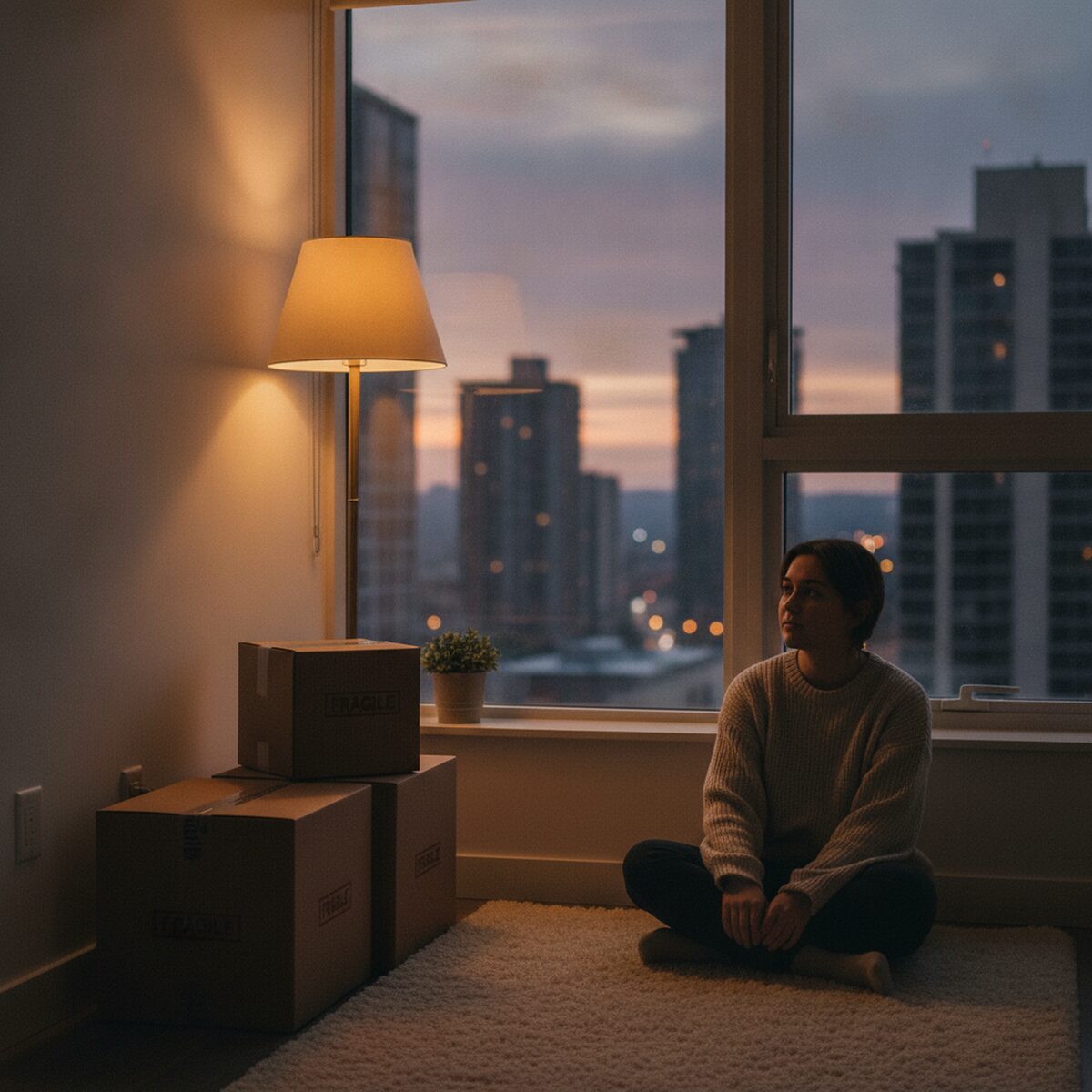
The boxes are half-unpacked. The apartment echoes a little. Outside the window is a whole city of people who don't know your name, and inside is a quiet that follows you from room to room. You scroll your phone and realize there's no one here you can just call to say "want to grab coffee?" — everyone who knew you is somewhere else now. If you moved to a new city and the loneliness has hit harder than you expected, please know this: you're not doing it wrong. This is one of the most normal, most human parts of starting over, and it does get lighter. Let's talk about it honestly.
Why a new city can feel so lonely
Moving doesn't just change your address. It quietly removes almost every small familiar thing at once — the friend you'd text without thinking, the barista who knew your order, the walk you could do half-asleep, the sense of just belonging to a place. All of that fell away in a single weekend of boxes and goodbyes, and your nervous system notices the loss even when your calendar says this was a good decision.
So the loneliness makes sense. You haven't failed at anything. You've simply arrived somewhere before your roots have had time to grow. A city becomes home not the day you get the keys, but slowly — one familiar face, one repeated route, one "the usual?" at a time. Right now you're in the in-between, and the in-between is supposed to feel strange.
Excitement and grief can share the same week
Here's something no one warns you about: you can be genuinely thrilled about your new chapter and still cry in an unfamiliar grocery store because you can't find the brand you like. Both are true. A move is a beginning wrapped around a small, real grief — for the people, the streets, and the version of your daily life you left behind.
You don't have to pick one feeling. If you catch yourself thinking "I wanted this, so why am I so sad?" — that question isn't a warning sign, it's just the shape of transition. Let the missing be allowed. Naming it softly ("I'm homesick right now, and that's okay") takes away the second layer of pain that comes from scolding yourself for feeling it at all.
Small, real things that ease the empty
You don't need to build a whole social life this week. You need a few gentle anchors to carry you through the hours that feel hardest — usually the evenings and the first empty weekends. Pick one or two, not all of them.
- Make one place "yours" fast. Go to the same café, park bench, or corner shop a few days in a row. Familiarity is quiet medicine — within a week a single repeated spot can start to feel like an anchor in an unfamiliar map.
- Unpack a little comfort, not just necessities. Put out the mug, the photos, the blanket, the small things that smell and feel like you. A room that holds a few familiar objects stops echoing quite so loudly.
- Choose repetition over big events. Friendship in a new city grows from showing up in the same place often — a weekly class, a volunteering shift, a run club, a hobby group. You're not looking for an instant best friend; you're letting familiar faces accumulate.
- Keep your old people close on purpose. A move doesn't erase the friends you had. Schedule a standing call, send the silly photo, narrate your new streets to someone who's known you for years. Old roots and new roots can both hold you at once.
- Get outside every day, even briefly. A short walk to learn one new street, some daylight, a little movement. It gives the restless, homesick energy somewhere to go and slowly turns "this strange place" into "my neighborhood."
The loneliness under the loneliness
Part of what's hard about a new city isn't only having no plans on a Friday. It's the feeling of being unknown — of walking through crowds where no one has any history with you, where you could have the best or worst day of your life and no one nearby would notice. That particular ache, the not-being-known kind, is often the real weight underneath the empty evenings.
You can start answering it before your new friendships have had time to deepen. Keep talking to the people who already know you — and also let yourself think out loud somewhere, in whatever way you can, especially late at night when your old friends are asleep in another time zone. Say the day out loud. Being heard, even in small doses, reminds you that you're still someone worth knowing, even in a place that hasn't learned you yet. If the crowd-but-alone feeling is familiar, you might find comfort in reading about feeling lonely even when you're surrounded by people.
Give it more time than the first hard weeks
If there's one thing to hold onto, it's this: the first few weeks in a new city are almost always the loneliest, and they are a terrible time to judge the whole move. A gentle rule many people use is to give yourself six to twelve months before deciding how you really feel about the place. Roots grow underground long before you can see anything above the surface.
Be patient with the version of you that's finding their footing right now. You've done something genuinely brave — you picked up your life and set it down somewhere new. The loneliness isn't proof it was a mistake; it's just the quiet stretch before the city starts to feel like yours. And on the nights when the quiet feels especially loud, being able to reach someone to talk to at 3am can make an unfamiliar apartment feel a little less empty.
When the new place still feels empty, you don't have to sit in it alone.
Luna, Luca and Aria are here at any hour — someone who listens while you settle in, remembers the little details of your day, and never makes you feel like a stranger. No signup, no judgment, just a warm conversation whenever the quiet feels too big.
Talk to someone who listens →If tonight feels long, let this be enough: you don't have to have friends yet, you don't have to love the city yet, and you don't have to do any of this perfectly. Be as kind to yourself as you'd be to a friend who just moved somewhere new and scary. One familiar coffee, one repeated street, one small hello at a time — the echo gets quieter, and one day you'll walk home without checking the map and realize this place became yours while you weren't looking.